Colorado / Engineering & alpinism

NicholasMoline.

Engineer. Alpinist. Builder.
Equally at home with a soldering iron or an ice axe.

Explore the story ↓
01 / Aerospace RF02 / Alpine pursuits03 / Independent hardwareAlways upward ↗
01 / The person

Built for
the unknown.

I'm Nicholas, an aerospace RF engineer and alpinist based in Colorado. I gravitate toward technically demanding challenges — the kind that require a deep understanding of the problem, sound judgment, and the determination to find a way forward.

Outside the lab, I spend an unreasonable amount of time on granite, glaciers, frozen waterfalls, and long approaches that seemed like a good idea at 4:00 AM.

Curiosity gets me started, but it rarely stops there. I want to understand things from first principles, develop real proficiency, and hold myself to recognized standards. Whether I’m troubleshooting RF hardware or navigating alpine terrain, I believe the best solutions come from preparation, focus, and a willingness to adapt.
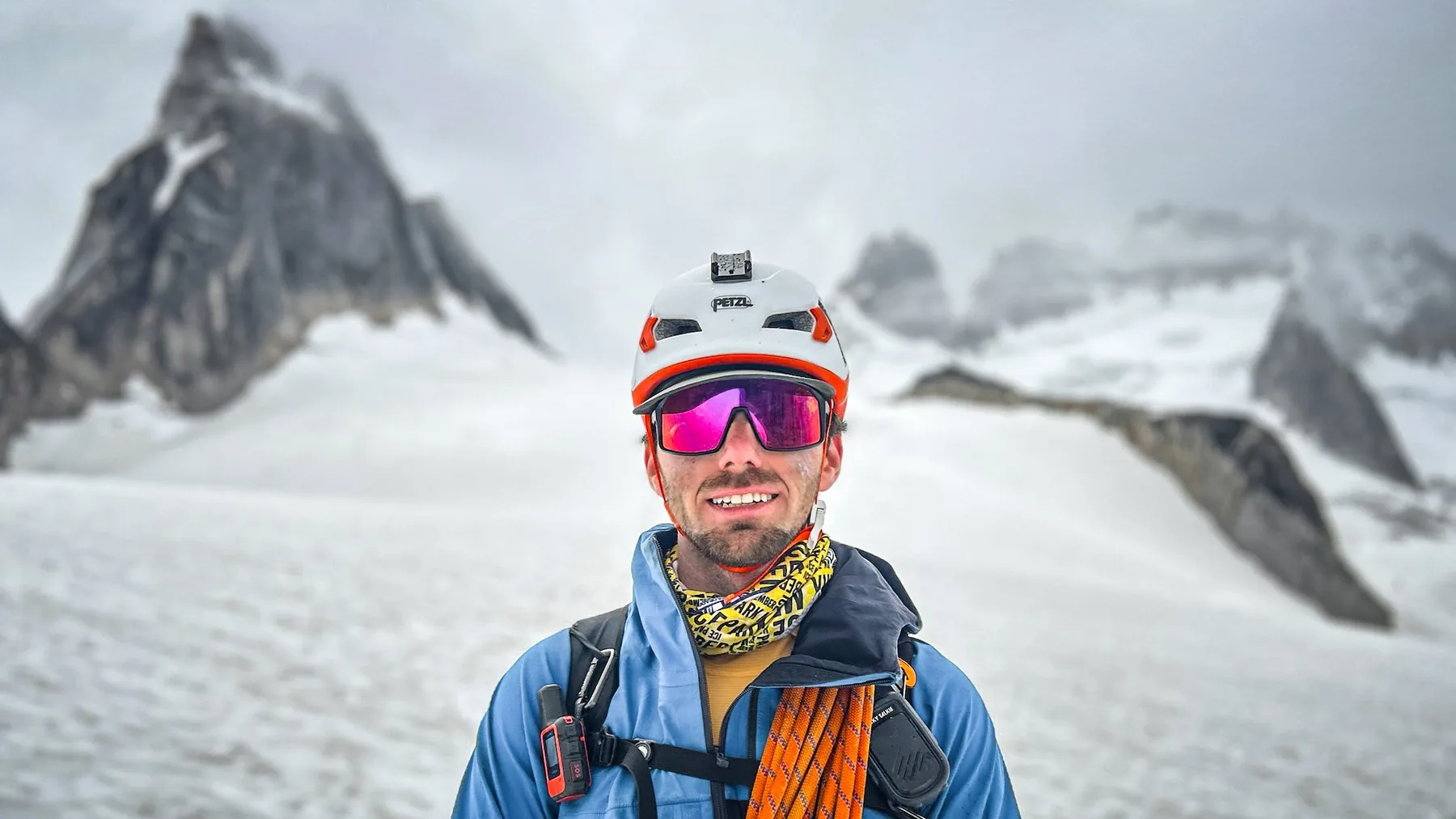
Nicholas Moline in alpine gear with a snowy mountain backdrop
Somewhere cold.Fig. 01 / Personal brief
The approach / From the bench to the mountains

Different terrain.
Same mindset.

Engineering and technical climbing demand more than ambition. Both reward disciplined preparation, focused problem-solving, and the ability to make sound decisions when the consequences are real. That overlap shapes the way I approach challenges.

01 / JUDGMENT

Manage risk.
Make it explicit.

Identify failure modes, understand their consequences, build in margins, and reassess as new information becomes available. Whether qualifying flight hardware or evaluating alpine conditions, the goal is to manage risk deliberately — not mistake confidence for safety.

02 / INITIATIVE

Find a way
forward.

I approach difficult problems with a can-do attitude: break the challenge into manageable pieces, work within the constraints, and look for practical solutions. Persistence matters, but so does recognizing when to change course or call it a day.

03 / TECHNICAL DEPTH

Focus.
Get into the details.

I enjoy the sustained technical concentration it takes to understand a complex system. From RF stability and circuit behavior to rope systems and route planning, I want to understand why something works, where it can fail, and how to verify it.

↗ Ambitious objectives. Deliberate execution. Sound judgment.

02 / The work

From the lab
to the launchpad.

My background at United Launch Alliance (ULA) is in flight-critical RF hardware, microwave engineering, avionics qualification, and failure analysis. I enjoy turning ambiguous technical problems into testable questions, using analysis and measurement to close uncertainties, and balancing performance with reliability. The objective is not just to make hardware work, but to build confidence that it will work when it matters.
01 — UNITED LAUNCH ALLIANCE

Launch vehicle RF

RF component engineering for flight-critical launch vehicle hardware, including technical ownership as a Certified Responsible Engineer (CRE), microwave systems, and avionics integration support.

02 — ENGINEERING ASSURANCE

Prove it works.

Environmental qualification, hardware testing, and failure analysis. Understand the failure modes, investigate anomalies, and use objective evidence to establish confidence in hardware performance and reliability.

03 — AFTER HOURS

Build. Test. Repeat.

Independent electronics work spanning RF prototypes, amplifier design, embedded systems, FPGA-controlled hardware, and custom boards that almost always teach me something useful.

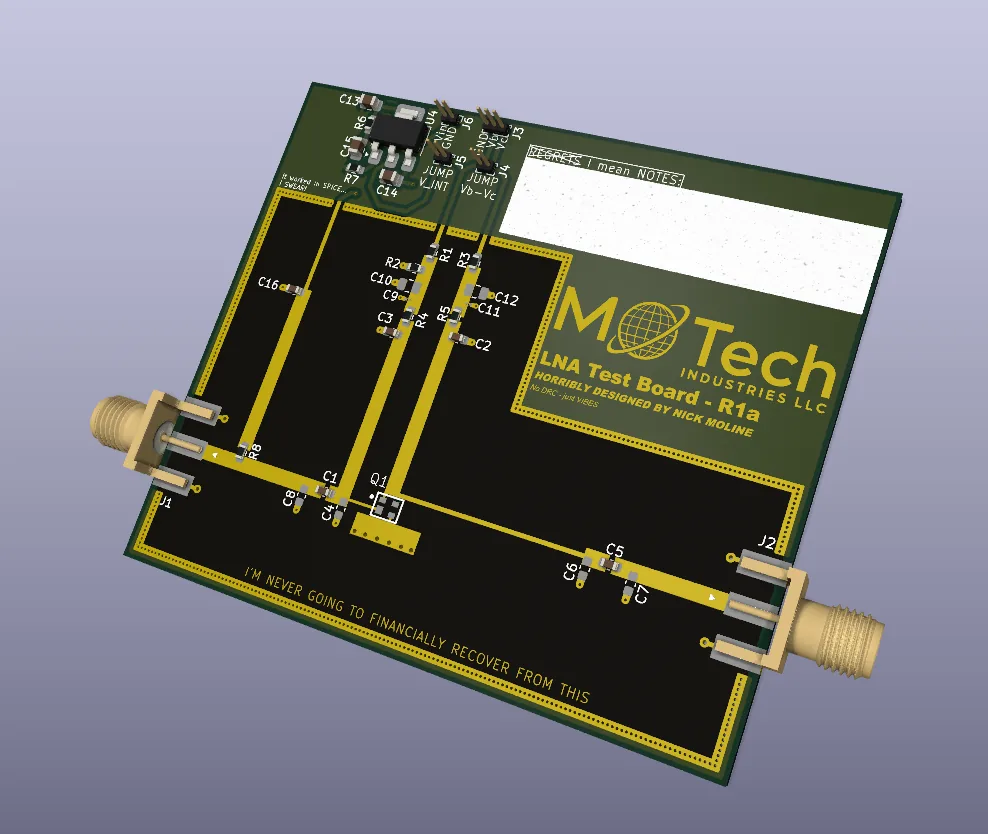
3D render of an LNA test board by MoTech Industries LLC

Independent hardware, but make it fun.

I’m into the full cycle: idea, schematic, layout, assembly, debug, test, and the occasional “why did I think this trace routing was a good idea?” moment. Personal builds are where a lot of the experimentation happens.

03 / The pursuit of mastery

Learn the craft.
Meet the standard.

Whether it’s microwave engineering, technical climbing, or wilderness medicine, I want to understand the principles, put in the practice, and develop skills I can demonstrate against recognized standards. My education, patent work, and mountain qualifications reflect that approach. Formal training and assessment are opportunities to challenge assumptions, strengthen judgment, and identify what I still need to learn. They’re milestones in the pursuit of mastery, not the finish line.

01 / Engineering & innovation

01.1

Embry-Riddle Aeronautical University

Bachelor of Science in Electrical Engineering · 2020

01.2

U.S. patent co-inventor

Electromagnetic slosh and liquid position detection. RF-based sensing for monitoring liquid position and slosh in applications including spacecraft propellant tanks.

US 11,874,295 B2 · Granted 2024 ↗

02 / Mountain craft & safety

02.1

AMGA Single Pitch Instructor

American Mountain Guides Association · SPI certification.

02.2

AIARE Level 1

American Institute for Avalanche Research and Education · avalanche education, decision-making and risk management in avalanche terrain.

02.3

Wilderness First Responder

WFR certification · wilderness medical training and emergency response in remote environments.

04 / The workbench

Projects.

A few of the boards and layouts behind the scenes — because the mountain photos are cool, but the weird hardware deserves some airtime too.

RF LNA test board render
RF / Microwave

LNA test hardware

Prototype board work for RF amplifier development, matching experimentation, and measurement-driven iteration.

MoTech Industries LLC / render view
Dense embedded PCB layout
Embedded / Digital

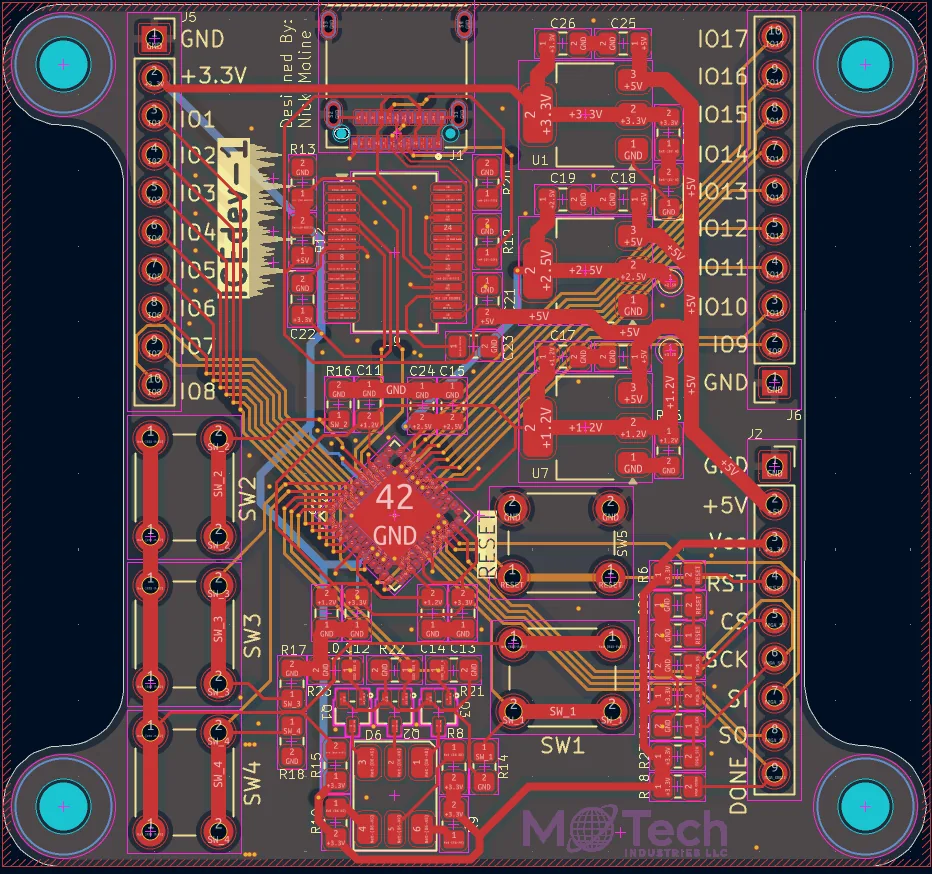
Control board layout

Dense mixed-signal routing, power rails, headers, and a lot of practical design compromise living together on one board.

Layout screenshot / designed by Nick Moline
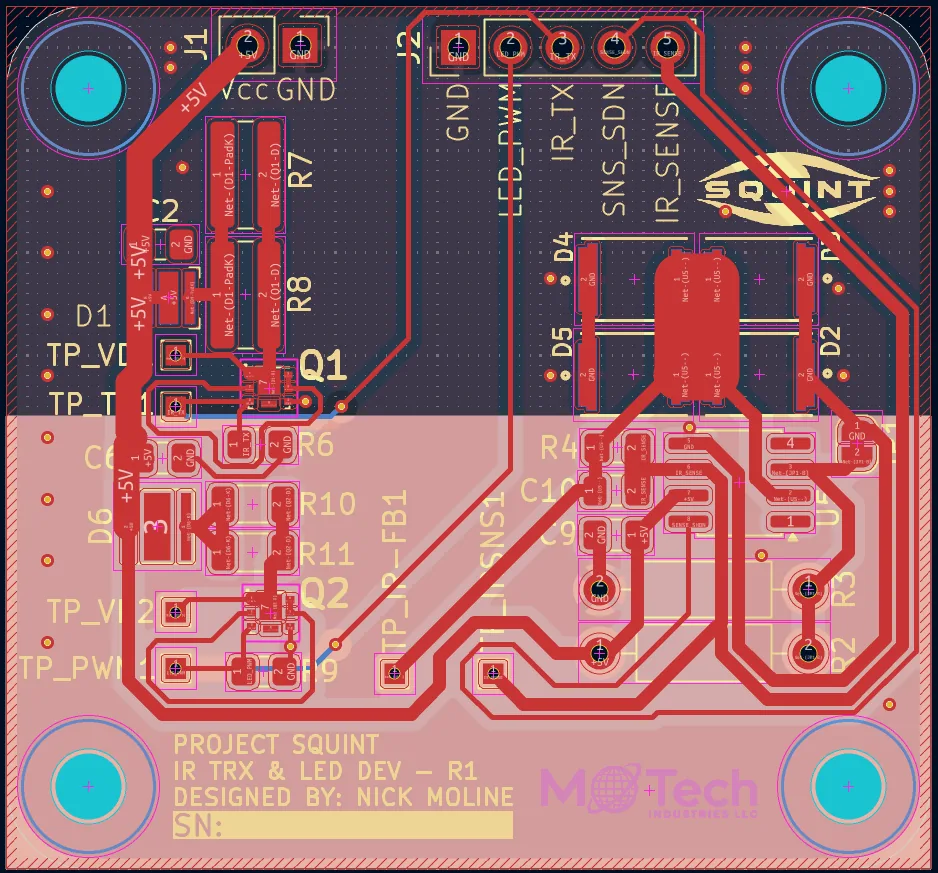
Project Squint PCB layout
Optics / Hardware

Project Squint

IR transceiver and LED development hardware — equal parts useful development platform and proof that side projects escalate quickly.

Yes, I noticed the silk-screen joke.
05 / Beyond the bench

Field notes.

Cold mornings. Long approaches.
Good company. Well-earned views.

In the field / Mentorship

Pass the
knowledge on.

Here I'm teaching a friend about gear placements in traditional climbing. It's an opportunity to talk through the reasoning behind a placement, not just demonstrate the technique.

The same principle applies in engineering: share what you know, explain the assumptions behind a decision, and help others develop the judgment to solve problems independently. Technical competence is more valuable when it can be passed on.

Share the reasoning / Build confidence through understanding

THE OPERATING PHILOSOPHY

Sursum
et porro.

UPWARD & ONWARD